BLOG

Harmonised Rules Across the EU
At Gluten-Free Hub EU, we strive not only to showcase gluten-free providers but also to follow the latest information in the field of coeliac disease and gluten-free nutrition.
Therefore, we attended the webinar organised by AOECS entitled Key Regulatory Issues Affecting Coeliac Disease in Europe, which was led by Klaus Berend, Director for Food Safety, Sustainability and Innovation at the European Commission.
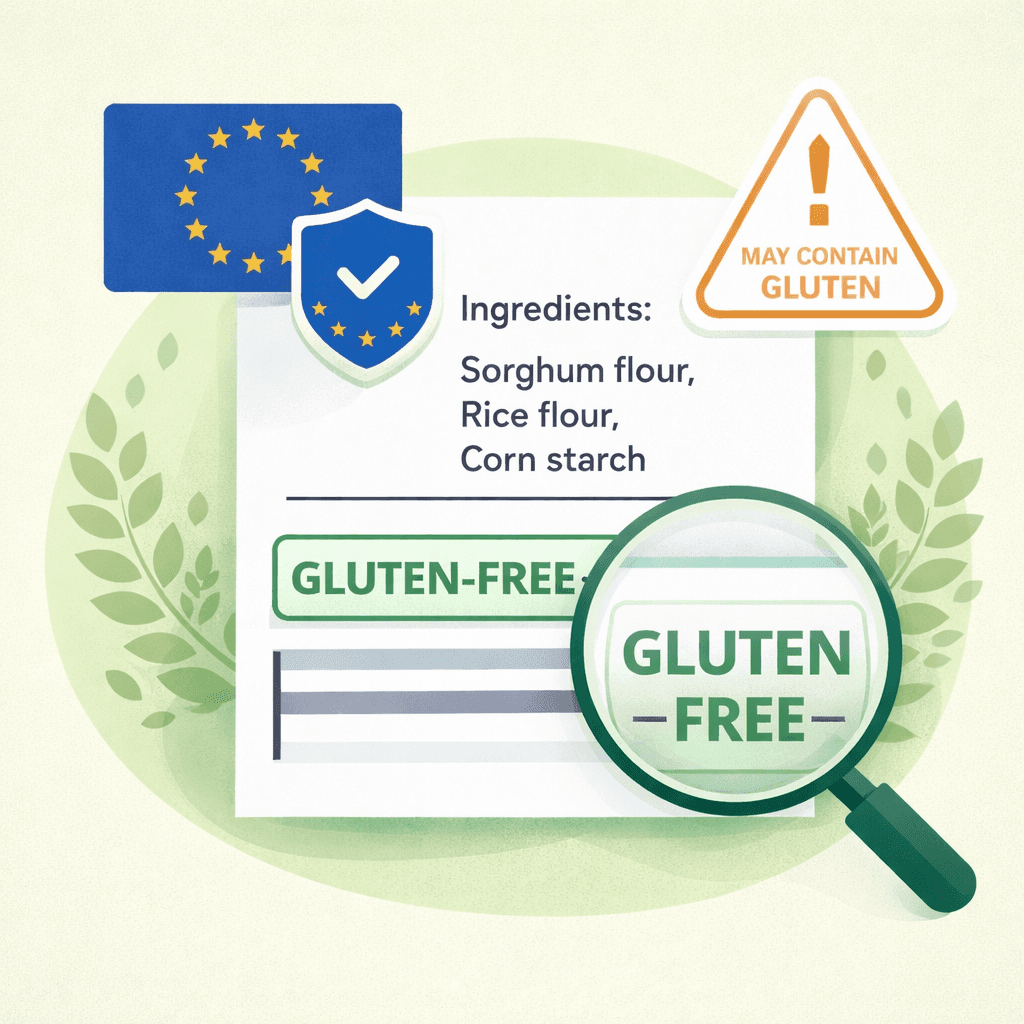
One of the most important new developments is the planned harmonisation of rules for precautionary allergen labelling (PAL), which includes warnings such as:
‘May contain gluten’
‘May contain traces of wheat’
‘Produced in a facility that uses gluten’
Currently, the use of such warnings varies considerably among EU countries. The European Commission aims to establish uniform rules that will apply across the European Union.
This means that the same product should not have different warnings in different countries.
Less Overuse of ‘May Contain’ Warnings
The most important message of the webinar for people with coeliac disease was that the goal of the new rules is not to increase the number of warnings, but to reduce their overuse.
Today, many manufacturers use ‘may contain’ labels very broadly and often primarily for legal protection, even when the actual risk of cross-contamination is very low.
The consequences are:
less product choice,
more confusion among consumers,
less trust in labelling.
The European Commission therefore wants to introduce a system based on:
scientifically determined risk thresholds,
harmonised reference values for the entire EU,
actual risk assessment,
standardised testing methods.
In the future, the ‘may contain’ warning should not be used automatically, but only when a genuine, relevant risk exists.
Codex Guidelines and New European Legislation
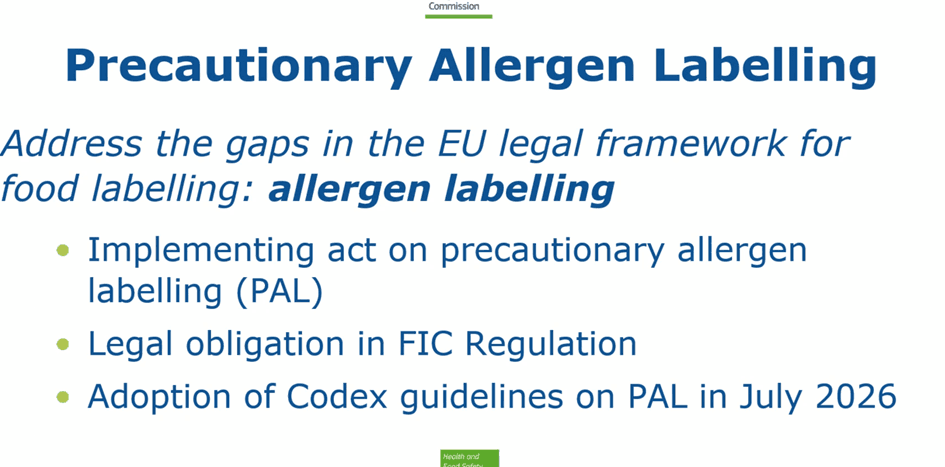
At the webinar, it was confirmed that the new Codex guidelines for precautionary allergen labelling have already been aligned at the international level and are expected to be finalised in July 2026.
The European Commission emphasised that the guidelines are largely consistent with the European approach.
The next steps include:
the preparation of a scientific basis by EFSA,
the development of harmonised analytical methods,
the preparation of a European implementing act on PAL.
The European Commission's current target is to draft the new legislation by the end of 2027, with representatives stressing that quality will be more important than the speed of adoption.
What Could This Mean for People with Coeliac Disease?
If the proposed changes are adopted in the anticipated form, in the long term this could mean:
✅ fewer unnecessary ‘may contain’ warnings
✅ greater choice of products for people with coeliac disease
✅ clearer and more reliable labelling across the EU
✅ increased consumer trust
✅ a more scientifically sound approach to risk assessment
Conclusion
Although there is still some time to go before final legislation is in place, the webinar clearly shows that the European Union is tackling precautionary allergen labelling more seriously, more consistently, and with better scientific backing than ever before.
For people with coeliac disease, this could mean an important step forward: fewer unnecessary restrictions, more confidence in product declarations, and more uniform rules across Europe.
Blog posts