BLOG
Why does worry even exist?
After consuming food with gluten, gluten can temporarily remain in saliva, dental plaque, interdental spaces, and food residues around the lips or chin. Theoretically, it can therefore be transferred through kissing.
For many years, these concerns were primarily supported by patient experiences rather than direct clinical research. This caused a lot of uncertainty and caution, especially in intimate situations.
First Direct Study: Kissing and Gluten
In 2025, the first scientific study systematically examining gluten transfer through kissing was presented at the Digestive Disease Week (DDW) conference.
How the Study Was Conducted
The study involved ten couples, where one partner had coeliac disease. The partner without coeliac disease consumed a meal with gluten, followed by a ten-second "French" kiss.
The study included two scenarios: one without an interim measure and another where the partner drank a glass of water before kissing.
Study Results
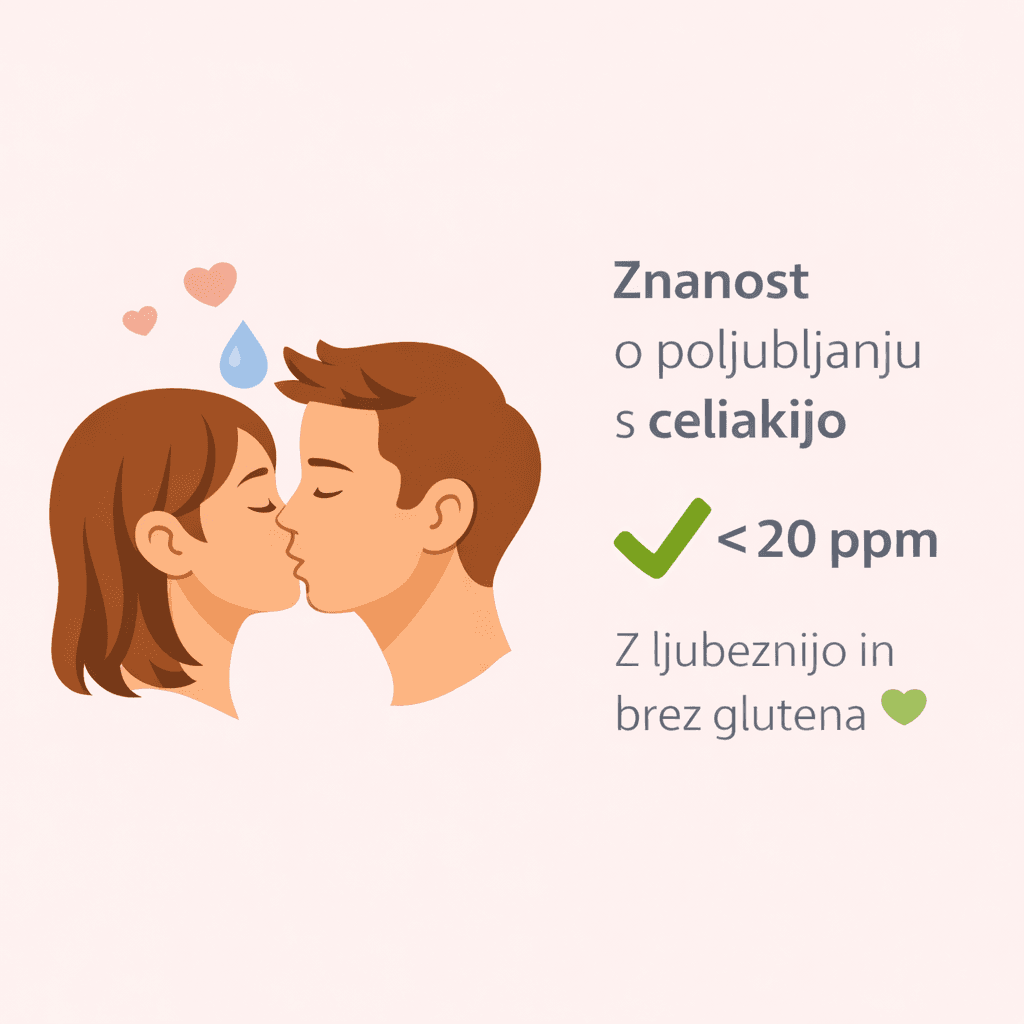
In eighteen out of twenty cases, the gluten content in the saliva of the partner with coeliac disease was below 20 ppm, which is the internationally recognised limit for a "gluten-free" label. After drinking water, no sample exceeded the safe limit. None of the participants reported symptoms.
These results show that the transfer of gluten through kissing in real conditions is extremely small.
Is This the Only Study?
Yes – this is the only study that directly measures the transfer of gluten through kissing. However, it is also supported by indirect scientific evidence.
Research shows that saliva contains enzymes that partially break down proteins, and gluten is diluted in the mouth and mechanically removed by swallowing and drinking.
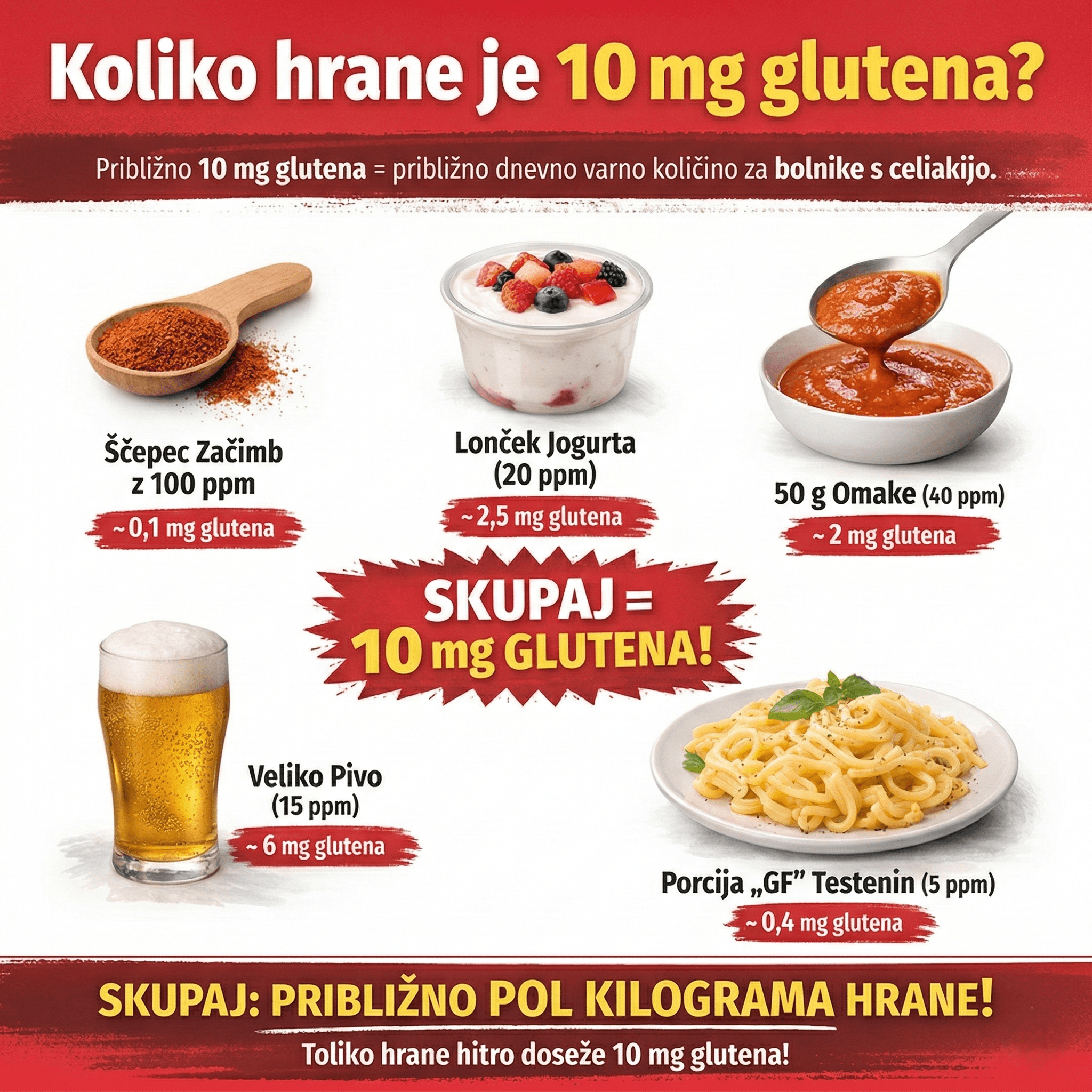
Additionally, studies on intake threshold demonstrate that most individuals with coeliac disease do not develop histological damage when exposed to less than 10–20 mg of gluten per day, which is significantly more than a typical kiss could introduce.
Why Do Some People Still Report Reactions?
People with coeliac disease are not a homogeneous group. The reasons for issues after kissing can vary.
Often, it's due to food residues on the lips or chin, sharing drinks or utensils immediately after meals, using cosmetics or dental products containing gluten, psychophysiological stress (the so-called nocebo effect), or exceptionally high individual sensitivity.
Ten practical tips for kissing if you have coeliac disease
A glass of water after a meal containing gluten has been proven to reduce gluten in saliva.
After a meal, the risk is further reduced over time.
Brushing teeth or rinsing the mouth provides good additional protection.
Paying attention to the beard and moustache is important, as crumbs tend to linger there.
It's wise to avoid sharing glasses and utensils immediately after a meal.
Start with a gentle kiss; wait a while for a more passionate one!
Understanding from your partner in relation to the significance of gluten traces expresses true closeness.
Open communication without embarrassment builds trust.
For greater sensitivity, the rule of time (30–60 minutes after a meal) helps.
Most importantly, listen to your body.
Valentine’s Conclusion
Today, science clearly shows that kissing itself almost never poses a significant source of gluten. However, coeliac disease is not just a scientific equation, but a personal experience.
This is why the combination of knowledge, trust and tenderness is the best recipe for gluten-free love.
Blog posts