Article
Where does the fear of E-numbers come from?
There is a widespread fear among coeliacs that gluten might be hidden in:
E-numbers
additives
technical or ‘unclear’ ingredients
This fear often leads to checking long lists of supposedly dangerous additives, excluding otherwise safe foods, and constant uncertainty when eating. In practice, this does not increase safety but often causes more stress and unnecessarily restricts the diet.
What does European legislation say?
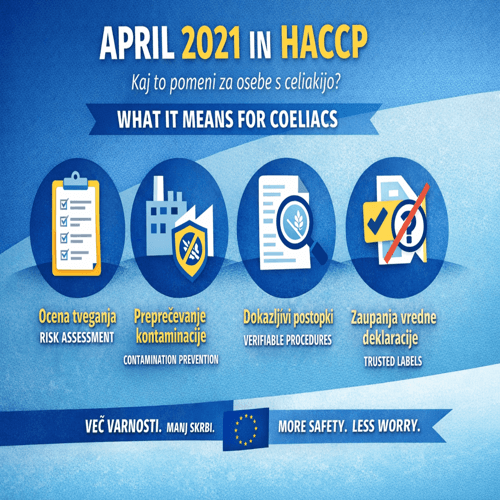
The European Union has clear and strict food labelling legislation, primarily Regulation (EU) No. 1169/2011, which mandates that all allergens must be clearly and mandatorily listed on the label.
This also includes:
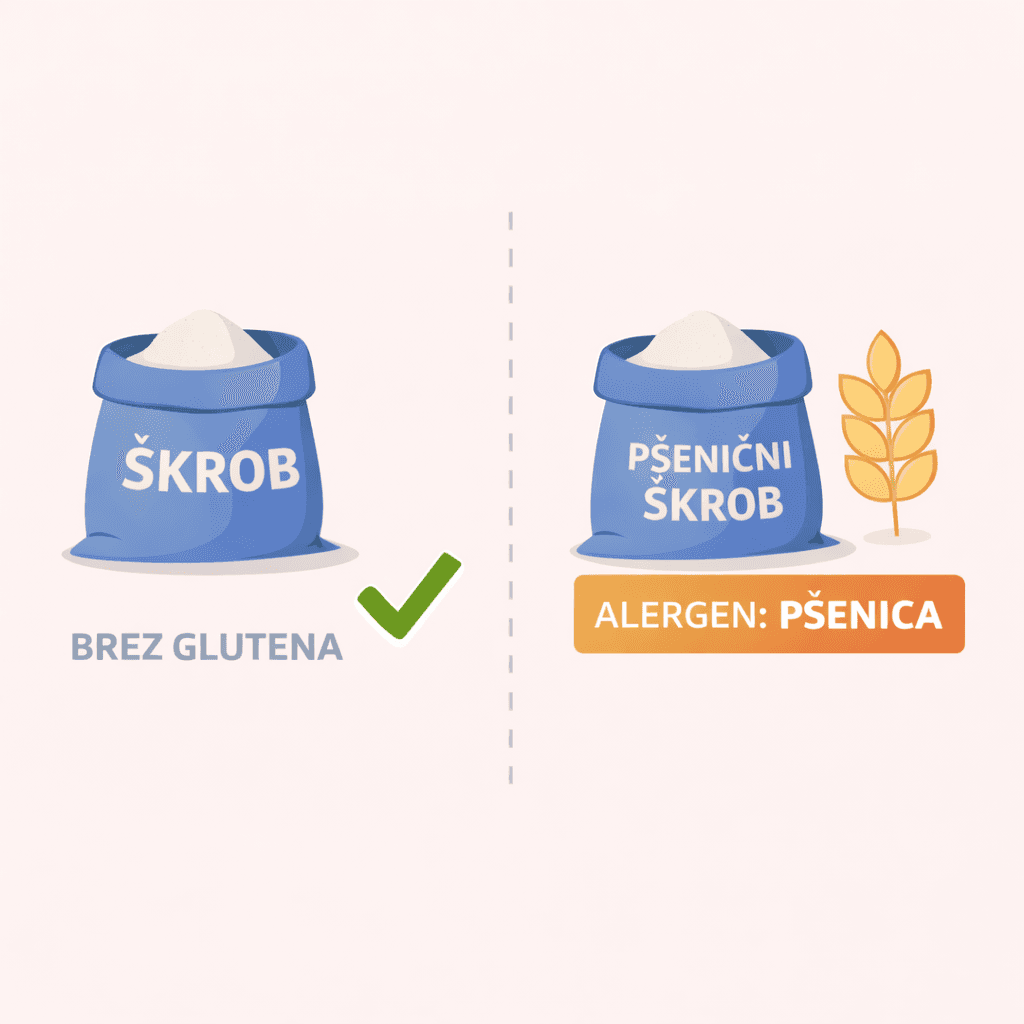
wheat
rye
barley
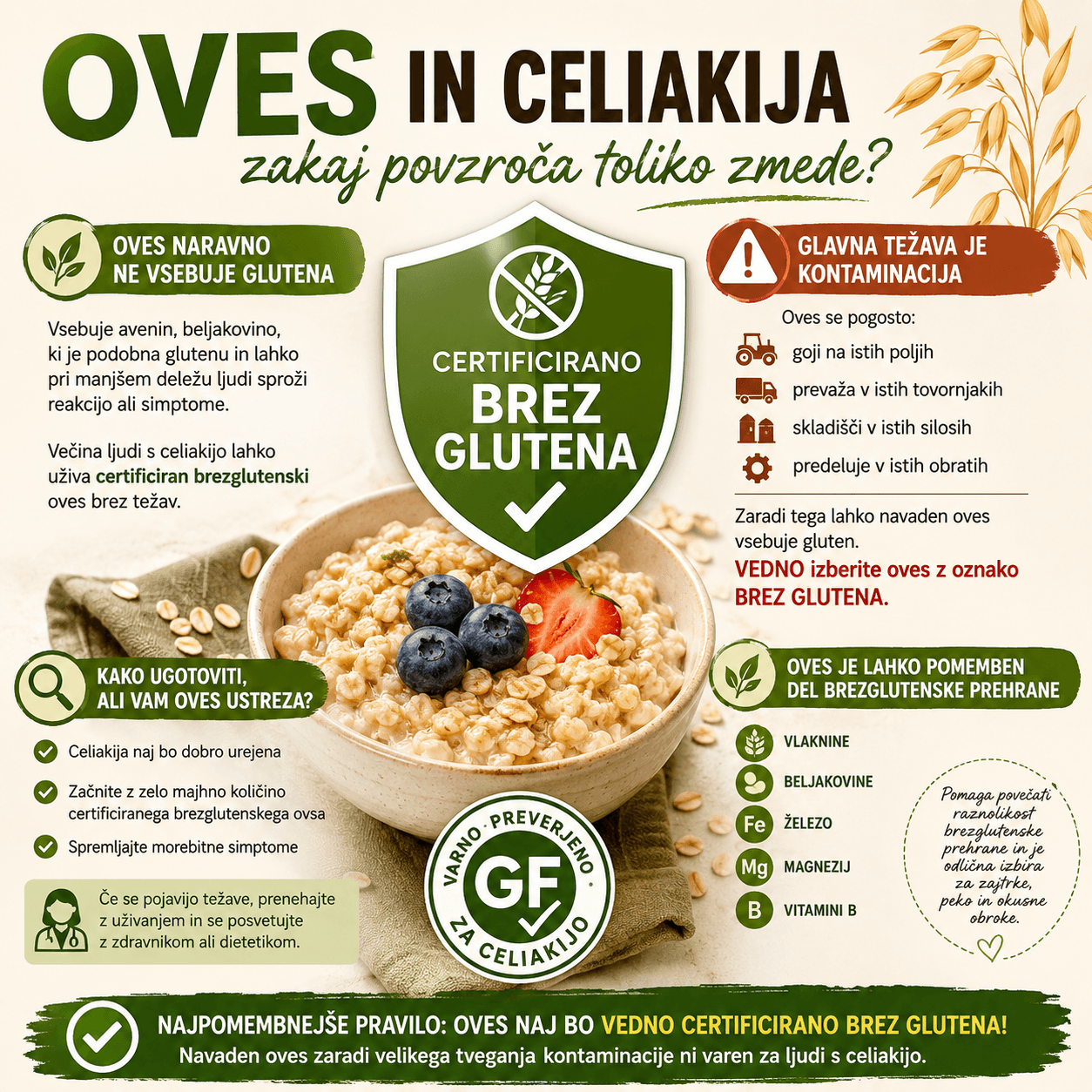
oats
gluten as such
In total, 14 allergens must be listed, which pose a health risk.
Key fact:
If any ingredient – including an additive or E-number – contains gluten or is derived from a gluten source, this must be clearly indicated on the packaging.
Gluten cannot be 'hidden' in E-numbers
One of the most common myths is that gluten can be concealed behind an E-number or technical term. This is simply not true.
Gluten:
cannot be listed solely as a number
cannot be disguised within an E-number
cannot be excluded from a food label
If an additive contained wheat, barley or another gluten source, this should be explicitly stated, usually with emphasis (e.g. bold among allergens).
Why are lists of E-numbers problematic?
Many lists circulate online and on social media:
of ‘suspicious’ E-numbers
of ‘potentially dangerous’ additives
of ‘prohibited’ additives for coeliacs
These lists are often:
outdated
taken out of context
ignoring current legislation
a source of unnecessary fear
Instead of helping, they often lead to excessive food exclusion, impoverished diets and a poorer relationship with food.
What really matters when reading labels?
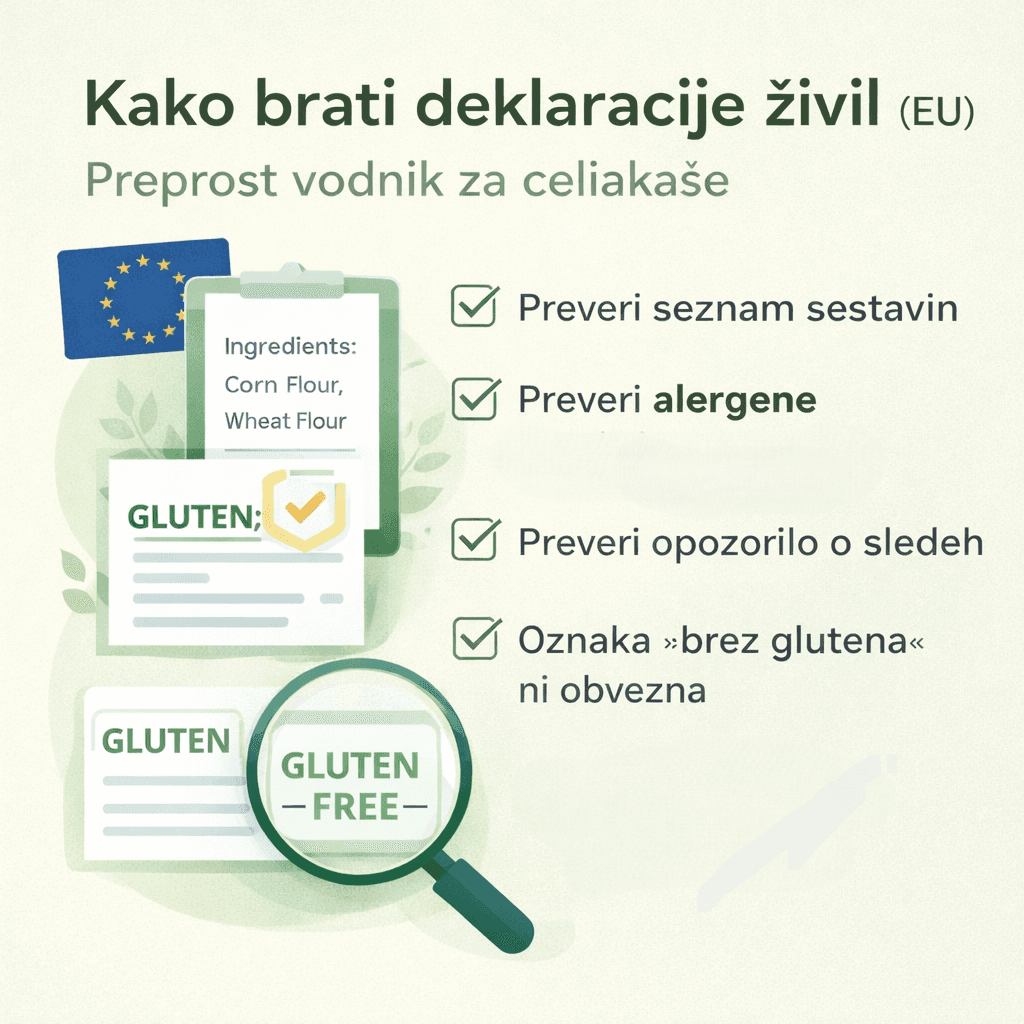
Instead of relying on tables and lists, check these three things:
First ingredients – whether they contain wheat, barley, rye or oats (except certified gluten-free oats).
Then allergens – whether gluten is listed among the mandatory allergens.
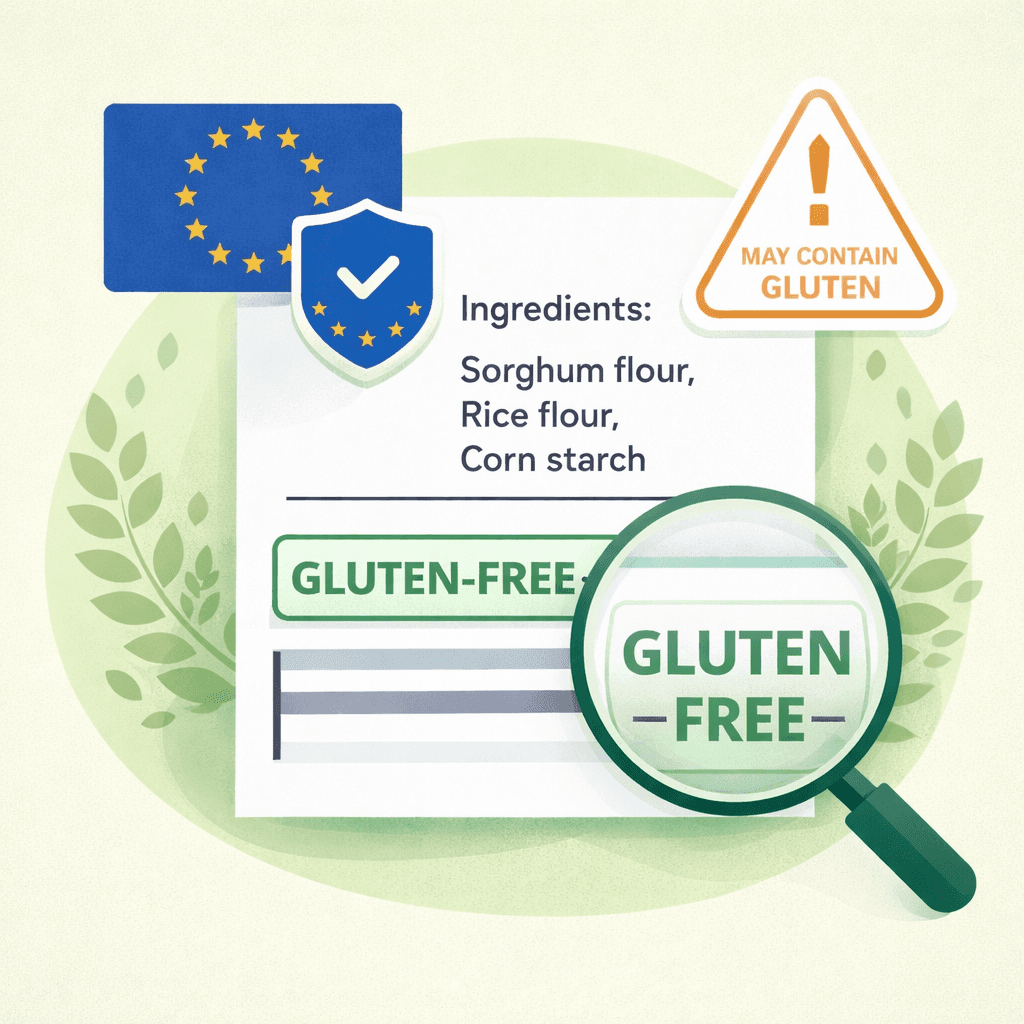
And finally trace warnings – whether ‘may contain gluten’ is indicated.
If:
gluten is not among the ingredients
not listed among the allergens
no trace warning
➡️ the product is safe for a person with coeliac disease, regardless of how many E-numbers it contains.
The food label is a legally binding document
The food label is not just informational text but a legally accountable statement by the producer. Incorrect or misleading labelling is a breach of legislation and can lead to severe penalties.
Therefore, manufacturers:
do not ‘forget’ to list gluten
do not hide allergens
do not leave it to chance
The system is designed to protect consumers.
Less fear, more knowledge
Coeliac disease requires caution, not constant fear. European legislation exists to protect us – and in practice, it works.
Instead of relying on unchecked lists from the internet, we can rely on:
legislation
correct reading of labels
verified information
This means more freedom, more choice, and a better quality of life with coeliac disease.
Blog posts